
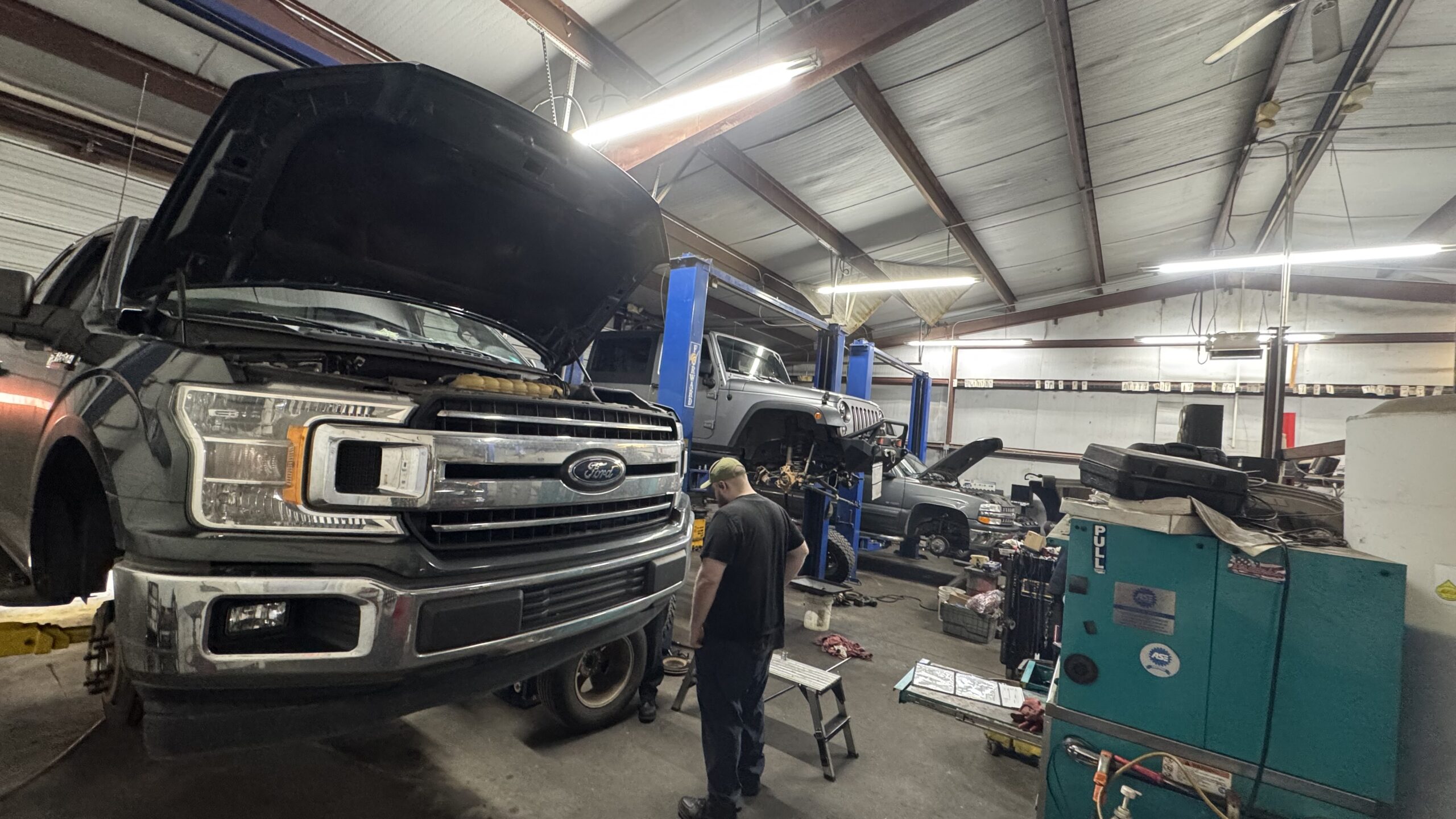
Why Prep Matters for a Smokies Road Trip
The Smokies mean elevation changes, winding switchbacks, quick-moving storms, fog, wildlife crossings, and stretches with limited services. Preparing your vehicle before you leave reduces the chance of roadside delays and helps you maintain control on steep climbs and long downhill grades.
A Smokies pre-trip check should include tires (including the spare), brakes, battery and charging system, coolant and hoses, engine oil, lights, wipers, HVAC/defroster operation, belts, steering and suspension, and essential emergency supplies. If you have a warning light, slow cranking, vibration while braking, worn tires, fluid leaks, overheating history, or visibility concerns, schedule service before your departure date.
Freehome Service Center provides pre-trip inspections, tire service, brake inspections, battery testing, cooling-system service, diagnostics, and repair for drivers in Cumming, GA, Freehome, Forsyth County, and surrounding North Georgia communities heading to the Smokies.
Quick Answer: What Should I Check Before Driving to the Smokies?
Before you leave for the Great Smoky Mountains, check:
- Tire tread depth, cold tire pressure (including the spare), and sidewall condition.
- Battery health, terminals, and cables.
- Brake performance and brake-fluid condition.
- Coolant level and protection against overheating on long climbs.
- Windshield wipers, washer fluid, and defroster operation.
- Headlights, brake lights, turn signals, and hazard lights.
- Engine oil level and current maintenance status.
- A/C and defroster performance for humidity and fog.
- Emergency kit, phone charger, and roadside supplies.
- Weather forecast, park alerts, and route closures.
The National Highway Traffic Safety Administration recommends checking tires, brakes, lights, wipers, washer fluid, coolant, battery-related systems, and emergency supplies before long trips and mountain driving.
Inspect Tires for Mountain Grades and Changing Weather
Steep grades, tight curves, wet leaves, and sudden showers in the Smokies make tire condition critical for braking, steering, and traction. Inspect your tires well before departure—not at the trailhead or overlooks.
Check Tire Pressure
Extra cargo, passengers, and temperature swings affect tire pressure and heat buildup. Check pressures when tires are cold, ideally before driving or after the vehicle has been parked for at least three hours.
Use the pressures on the vehicle’s Tire and Loading Information label (driver-side door jamb). Do not use the maximum pressure printed on the tire sidewall as your normal target, and remember TPMS may not alert until pressures are already too low.
NHTSA advises using the vehicle manufacturer’s recommended inflation pressure, inspecting tires monthly and before long trips, and checking pressure when tires are cold.
Check Tire Tread
Good tread helps evacuate water and maintain grip on rain-slick or leaf-covered pavement. Inspect all four tires for:
- Low tread depth or tread-wear bars showing.
- Irregular or uneven wear patterns.
- Cupping or scalloping.
- Cracks, cuts, punctures, or lodged debris.
- Sidewall bulges or bubbles.
- Exposed cords or fabric.
- Tires that repeatedly lose air.
Replace tires that are worn or damaged. A bulged sidewall or exposed cords indicate structural failure and should be addressed before any mountain travel.
Consider Your Driving Routes
All-season tires can work for highway travel, but heavy rain, wet leaves, or gravel pull-offs may call for deeper tread and proper load ratings—especially if you’re towing or carrying rooftop gear. Verify your spare tire, jack, and tools are present and usable, and consult your owner’s manual and park guidance before tackling unpaved or higher-elevation routes.
Test the Battery and Charging System
Mountain trips often mean early starts, frequent photo stops, and accessory use that can expose a weak battery. A battery that seemed fine around town may struggle on the road—especially if it’s older, corroded, undercharged, or paired with a weak alternator.
Schedule battery and charging-system testing if you notice:
- Sluggish engine cranking.
- Clicking from the starter when you turn the key.
- Dim headlights or dashboard lights, especially at idle.
- Battery/charging warning light.
- Repeated jump-starts.
- Slow or inconsistent operation of electrical accessories.
- Corroded or loose battery terminals.
- Swollen, cracked, or leaking battery case.
Pair a battery test with a charging-system evaluation. Hard starts can stem from battery age, but also from alternator output issues, corroded grounds, damaged cables, or parasitic drains from accessories like dash cams and coolers.
Freehome Service Center provides battery testing and replacement, alternator repair, starter diagnostics, terminal inspection, and electrical-system testing.
Check Coolant and the Cooling System
Long climbs at lower speeds can raise engine temperatures. Using the correct coolant, maintaining proper levels, and fixing leaks reduce the risk of overheating on mountain grades and keep your cabin heater working when you need defrost.
Before your trip, inspect:
Cooling System Item | What to Look For |
Coolant level | Correct level at the reservoir when the engine is completely cool |
Coolant condition | Manufacturer-specified coolant with proper mixture for heat control |
Radiator and hoses | Leaks, corrosion, soft spots, cracking, swelling, or dried coolant residue |
Water pump area | Weep-hole residue, bearing noise, or visible coolant traces |
Thermostat operation | Slow warm-up, temp swings, or poor cabin heat/defrost |
Cooling fan | Proper engagement at higher temps and with A/C on |
Pressure cap | Good seal and ability to maintain system pressure |
NHTSA recommends checking coolant level, inspecting the cooling system for leaks, testing coolant condition, and following manufacturer replacement intervals before extended trips and mountain driving.
Never remove a radiator or reservoir cap when the engine is hot. Pressurized systems can release scalding coolant or steam.
Inspect Brakes Before Mountain Descents
Long downhill stretches in the Smokies can increase stopping distances and overheat weak components. Worn pads, glazed rotors, low or contaminated fluid, pulling, vibration, or a soft pedal can make the vehicle harder to control on curvy, steep roads.
Schedule a brake inspection if you notice:
- Squealing, scraping, or grinding noises.
- Soft, spongy, or low brake pedal.
- Vibration or pulsation while braking.
- Vehicle pulling to one side during stops.
- Brake or ABS warning light.
- Visible fluid leak.
- Longer stopping distances.
- Burning odor or smoke near a wheel after a descent.
Don’t wait until you’re on mountain roads to correct brake issues. Strong brakes and healthy tires work together for safer stopping and better control.
Smokies Road-Trip Vehicle Service in Cumming, GA
Getting your car trip-ready before heading to the Smokies helps catch issues like worn brake pads and rotors, marginal coolant protection, weak batteries, underinflated or unevenly worn tires, streaking wipers, mis-aimed headlights, and fluid leaks—problems that become more noticeable on steep grades and winding mountain roads.
Freehome Service Center provides maintenance, tire service, brake inspections, battery testing, electrical diagnostics, cooling-system repair, and pre-trip vehicle inspections in Cumming, GA. Call (678) 947-6000 to schedule road-trip service at 14251 Cumming Highway, Cumming, GA 30040-5454.