
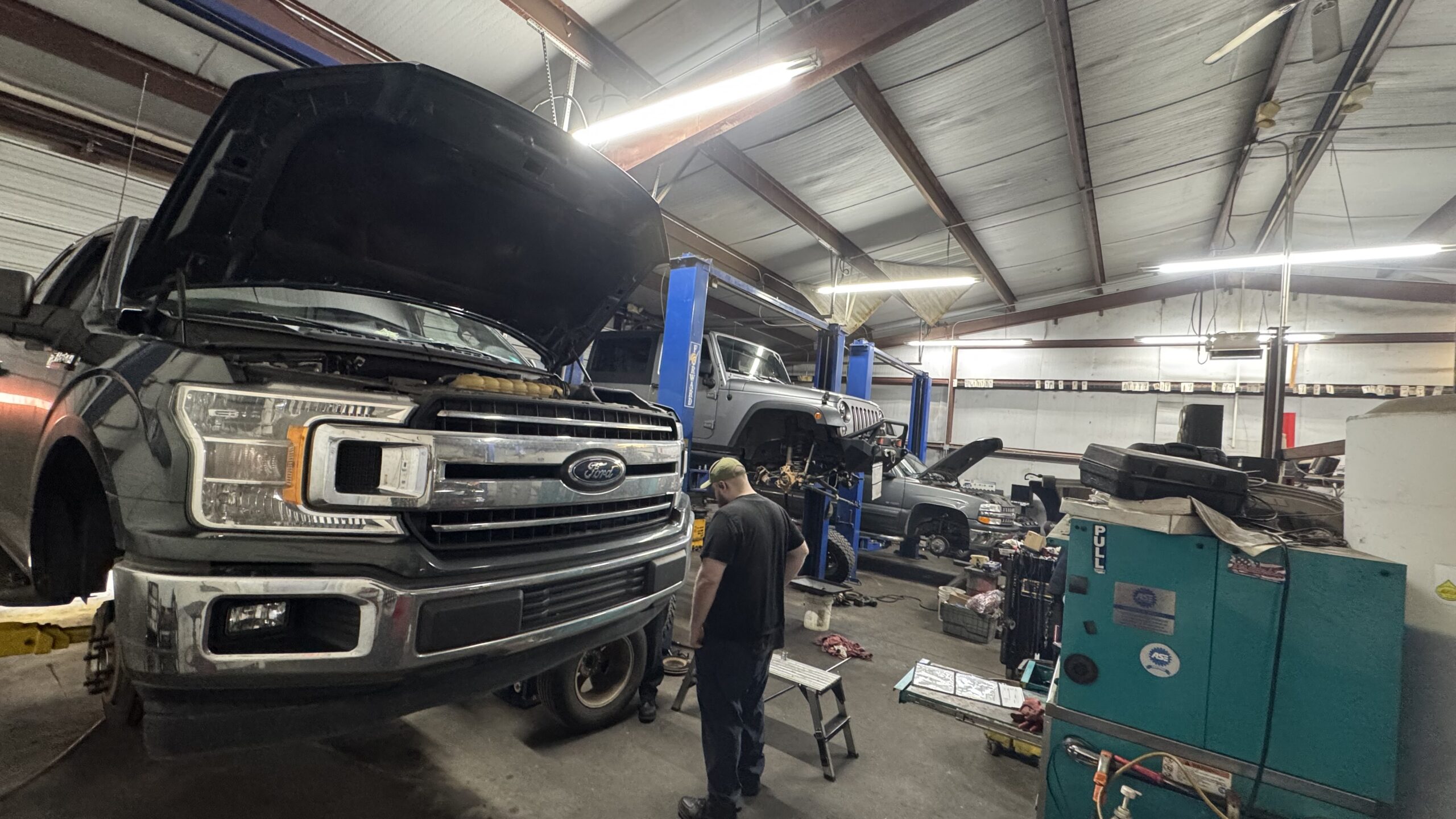
Poor Acceleration: What Causes Sluggish Response?
Poor acceleration can stem from fuel delivery problems, restricted airflow, ignition misfires, a clogged catalytic converter, transmission or clutch slip, sensor faults, vacuum or boost leaks, or even dragging brakes. Because many systems interact to create power and move the vehicle, the symptom alone doesn’t pinpoint the fault—so a new, persistent, or worsening lack of power should be professionally diagnosed.
Urgency depends on when the issue appears and which other symptoms are present. Hesitation or bogging paired with a flashing check engine light, harsh or delayed shifting, strong fuel or burning smells, audible pinging under load, or stalling requires prompt attention to prevent further damage or a roadside breakdown.
Freehome Service Center provides drivability diagnostics and repair for drivers in Cumming, GA, Freehome, Forsyth County, Canton, Ball Ground, Alpharetta, Sugar Hill, and surrounding North Georgia communities. Its services include fuel-pressure testing, injector and ignition diagnostics, MAF/MAP and oxygen-sensor testing, throttle-body service, intake smoke testing for vacuum/boost leaks, catalytic-converter backpressure testing, transmission and clutch evaluation, brake-drag inspection, and related performance maintenance.
What Does Poor Acceleration Feel Like?
Drivers often describe poor acceleration as a delay after pressing the pedal, a flat spot or bogging on takeoff, weak passing power, or surging instead of smooth pull. In some cases the engine revs but the vehicle barely gains speed (possible transmission or clutch slip); in others, the engine feels strained and the RPM climbs slowly (possible fuel/air restriction). It may be most noticeable uphill, while merging, with the A/C on, carrying passengers or cargo, at higher altitude, or after refueling.
When speaking with a technician, note:
- Whether the hesitation happens from a stop, during highway passing, or both.
- If engine RPM rises without a matching increase in speed, or if the engine bogs and RPM stays low.
- Whether it is worse when the engine is cold or after it warms up.
- If it appears during acceleration with the A/C on, on hills, while towing, or after a recent repair.
- Whether the vehicle shows a check engine, traction, or transmission warning, rough idle, misfires, smoke, or poor fuel economy.
- Whether it feels engine-related, shift-related, or like the brakes or a wheel are dragging.
A hesitation that tracks with throttle input and RPM often points to engine air, fuel, or ignition issues. RPM that flares while speed lags suggests transmission or clutch concerns. A symptom that worsens with wheel speed or wheel heat may indicate brake or hub drag rather than an engine problem.
Common Causes of Poor Acceleration
Several vehicle systems can cause sluggish or delayed acceleration. A professional inspection matters because some fixes are simple—like an air filter—while others, such as a weak fuel pump or a restricted catalytic converter, can lead to safety risks and costly damage if ignored.
Possible Cause | Typical Clues | Recommended Response |
Normal turbo lag or eco programming | Brief delay before power builds, no warning lights, otherwise smooth operation | Ask a technician to confirm whether the behavior is expected for your vehicle |
Restricted air filter or intake | Sluggish response, whooshing/whistling, reduced fuel economy | Inspect intake ducting and replace a dirty or collapsed filter |
Weak fuel pump or clogged fuel filter | Hesitation under load, long cranking, possible pump whine | Measure fuel pressure/volume; avoid heavy loads until inspected |
Worn spark plugs or ignition coil faults | Misfire, rough idle, check engine light (often worse on hills) | Schedule ignition-system diagnosis |
Clogged catalytic converter or exhaust restriction | Power falls off at higher RPM, excessive heat at exhaust, sulfur smell | Have exhaust backpressure tested and components inspected |
Transmission slip or worn clutch | RPM rises without speed increase, delayed shifts, burning smell | Arrange immediate transmission or clutch inspection |
Faulty MAF/MAP sensor or dirty throttle body | Delayed throttle response, surging, unstable idle | Request sensor testing and throttle-body cleaning or replacement |
Dragging brakes or failing wheel bearing | Vehicle slows quickly off-throttle, hot wheels, pull to one side | Schedule a brake and hub inspection; avoid extended driving |
Fuel delivery faults, ignition issues, airflow metering errors, exhaust restrictions, transmission or clutch problems, brake drag, and intake or boost leaks are among the most common reasons for poor acceleration.
Is Poor Acceleration Ever Normal?
Some reduction in acceleration is normal. Economy modes, air-conditioning load, steep grades, high altitude, and carrying passengers or cargo can all make a vehicle feel slower. Turbocharged engines may also exhibit a short, predictable lag before boost builds—especially noticeable at low RPM.
However, normal behavior should not become severe, sudden, or appear with warning lights, misfires, harsh shifting, smoke, strong odors, or unusual noises. If the change is new or you are unsure whether it is expected for your vehicle, it’s reasonable to have it checked.
A brief lack of punch right after a cold start or during extreme weather may be less concerning than a loss of power that continues after the engine reaches operating temperature. Still, persistent sluggishness needs evaluation because fuel pressure, ignition, airflow sensors, timing, turbo/boost leaks, and catalytic converter issues often become more noticeable under load.
How Poor Acceleration Is Diagnosed
Finding the cause of sluggish acceleration takes more than pulling a code. A technician considers your symptoms, service history, when the issue occurs (cold, hot, uphill, under load), and analyzes live data such as fuel trims, MAF/MAP readings, throttle position, oxygen sensor feedback, and transmission behavior.
The diagnostic process may include:
- Scanning for diagnostic trouble codes and reviewing live data to spot fuel, air, or ignition irregularities.
- Measuring fuel pressure and volume, and evaluating injector performance under load.
- Inspecting the air intake system: filter, throttle body, PCV system, and vacuum or intake leaks.
- Checking for exhaust restrictions and catalytic converter backpressure.
- Evaluating ignition components: spark plugs, coils, and misfire counters.
- Verifying cam/crank timing correlation and inspecting timing belts/chains where applicable.
- Performing compression and leak-down tests to assess internal engine health.
- Assessing transmission or clutch operation and brake drag that can reduce acceleration.
Freehome Service Center provides diagnostic testing for loss of power, hesitation, throttle-response issues, ignition and fuel-system concerns, turbo/supercharger performance, transmission or clutch problems, exhaust restrictions, belts, hoses, and other performance-related repairs.
Schedule Acceleration Diagnostics in Cumming, GA
Hesitation off the line or weak passing power may seem minor, but it’s a sign your vehicle needs attention. Early diagnosis can prevent damage from misfires, fuel starvation, clogged catalytic converters, transmission slip, or intake leaks—restoring safe, confident acceleration.
Call Freehome Service Center at (678) 947-6000 to schedule acceleration diagnostics in Cumming, GA. The shop is located at 14251 Cumming Highway, Cumming, GA 30040 and serves drivers throughout Freehome, Forsyth County, Canton, Ball Ground, Alpharetta, Sugar Hill, and nearby communities.