
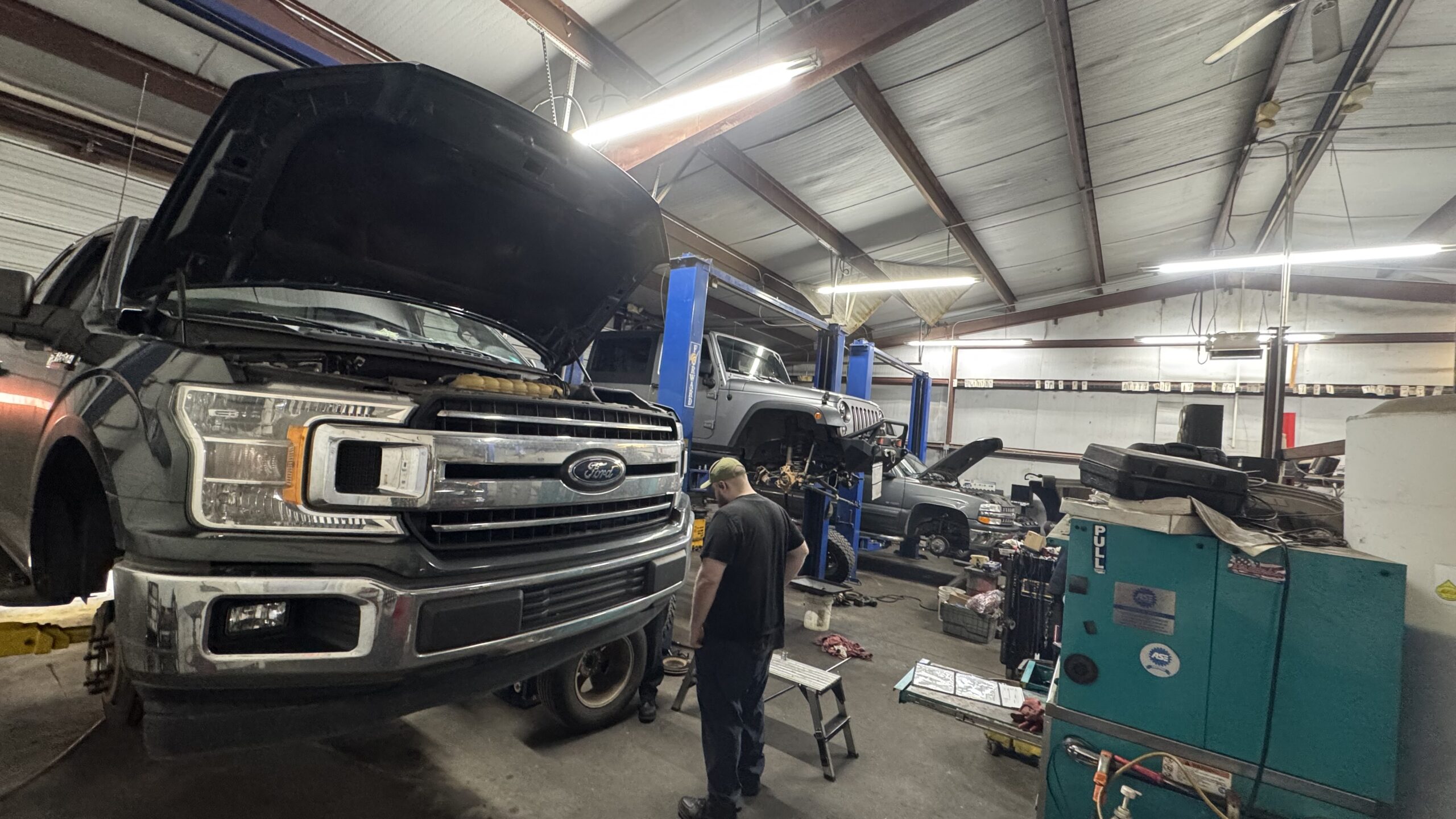
Cooling Fan Failure: Signs, Causes, and What to Do
Cooling fans pull air through the radiator at low speeds and idle to control engine temperature. When an electric fan motor, relay, fuse, fan clutch, control module, or wiring fails, the engine can overheat in traffic, the A/C may turn warm at stoplights, and repeated heat spikes can damage gaskets, sensors, and other components.
Typical indicators include temperature rises only when stopped, fans that never come on (or run constantly), loud roaring from a stuck mechanical clutch fan, or a fan that spins slowly or wobbles. If the gauge climbs or a temperature warning appears, turn the heater to HOT, pull over safely, and shut the engine off. Never reach near the fan—electric fans can start unexpectedly even with the key off.
Freehome Service Center provides expert cooling-fan diagnostics, electric fan motor and shroud replacement, fan-clutch service, relay and fuse replacement, control-module and temperature-sensor testing, wiring repairs, and complete cooling-system evaluations for drivers in Cumming, GA, Freehome, Forsyth County, and surrounding North Georgia communities.
Quick Answer: Is Cooling Fan Failure Serious?
Yes. A failed or intermittent cooling fan can let engine temperatures spike quickly at idle or in slow traffic, leading to overheating that can warp cylinder heads, damage head gaskets, and accelerate wear on coolant hoses, sensors, and other parts.
Because fans cycle on and off based on temperature or A/C demand, a problem may seem to come and go. Heat, vibration, and electrical load often make it worse. Don’t rely on turning the A/C off or driving faster as a solution—the underlying fault needs proper diagnosis and repair.
What Does the Cooling Fan Do?
The cooling fan draws air through the radiator and A/C condenser when vehicle speed alone isn’t enough, removing heat from the engine and helping the A/C stay cold at a stop. Most modern vehicles use one or two electric fans controlled by the engine computer through relays, modules, and temperature or pressure sensors.
Some trucks and SUVs use a belt-driven mechanical fan with a thermostatic clutch that tightens as temperatures rise. A worn clutch can slip and undercool, while a seized clutch can cause a constant, loud roar, reduced performance, and poor fuel economy.
Proper fan speed, an intact shroud, and unobstructed airflow are critical. Missing shrouds, damaged blades, debris, or incorrect fan operation can reduce cooling capacity even when the rest of the cooling system is in good condition.
Signs of Cooling Fan Failure
Cooling-fan issues aren’t always obvious. Many failures show up only when the engine is hot, the A/C is on, or the vehicle is idling. Because fans cycle on and off, problems can be intermittent and easy to miss while driving at highway speed.
Watch for these common signs:
- Temperature climbs at idle or in traffic, then drops once you start moving.
- A/C turns warm at stoplights but cools again while driving.
- Fan doesn’t spin when the engine is hot or A/C is on, or it spins slowly/erratically.
- Loud, constant roaring from a mechanical fan, or an electric fan that never shuts off.
- Burning smell, melted connector, or a fuse that repeatedly blows.
- Vibration, scraping, or rattling from the fan shroud or blades.
- Temperature warning or check engine light with fan- or temperature-sensor-related codes.
- Battery drain from a fan that runs with the key off due to a stuck relay or module.
- Overheating while towing or in hot weather despite a proper coolant level.
- Visible debris, damaged blades, or a missing/broken shroud reducing airflow.
If the engine overheats at low speed, the A/C fades at stops, or the fan behaves abnormally, it’s time for a professional cooling-fan inspection.
Common Cooling Fan Failure Locations
Cooling performance problems can originate from several fan-related parts. A professional inspection, electrical testing, and scan-tool commands are the most reliable ways to pinpoint the actual cause.
Leak Source | What Can Go Wrong | Possible Symptoms |
Cooling fan motor | Worn bearings, shorted windings, water intrusion, burnt commutator | Fan won’t run or runs slowly, overheating at idle, warm A/C at stops |
Fan relay | Contacts stuck open/closed, heat-soaked failure, internal short | No fan operation or fan runs constantly, battery drain, intermittent cooling |
Fan fuse | Blown fuse from shorted wiring or seized motor | Fan inoperative, repeated fuse failure |
Fan control module | Internal failure, overheating, poor ground or power feed | Intermittent fan operation, erratic speeds, extended fan run after shutdown |
Temperature sensor/switch (ECT) | Inaccurate readings, open circuit, sensor drift | Late or no fan engagement, overheating, cooling-fan or sensor codes |
Fan clutch (mechanical) | Worn silicone fluid, seized clutch, freewheeling clutch | Loud constant roar, inadequate cooling at idle, reduced fuel economy |
Fan shroud/airflow path | Cracked or missing shroud, debris blocking radiator or condenser | High temperatures at idle, vibration, uneven cooling |
Wiring/connectors | Corroded pins, damaged harness, poor grounds, rodent damage | Intermittent fan, blown fuses, burning smell, fan won’t respond to commands |
PCM/command or A/C pressure input | Software/calibration issue, failed pressure switch, sensor mismatch | Fans don’t engage with A/C on, overheating in traffic, stored diagnostic codes |
Age, heat cycles, vibration, electrical resistance, corrosion, debris intrusion, worn bearings, faulty relays, and wiring faults are all common causes of cooling-fan failure.
Cooling Fan Repair in Cumming, GA
A failed radiator or condenser fan can cause sudden overheating and weak air conditioning at idle. Freehome Service Center can test the fan motor, relays, control module, and sensors, verify airflow through the radiator and condenser, and explain the best repair for your vehicle.
Call Freehome Service Center at (678) 947-6000 to schedule cooling-fan diagnosis in Cumming, GA. The shop is located at 14251 Cumming Highway, Cumming, GA 30040-5454 and serves Freehome, Forsyth County, Canton, Ball Ground, Alpharetta, Sugar Hill, and nearby North Georgia communities.