
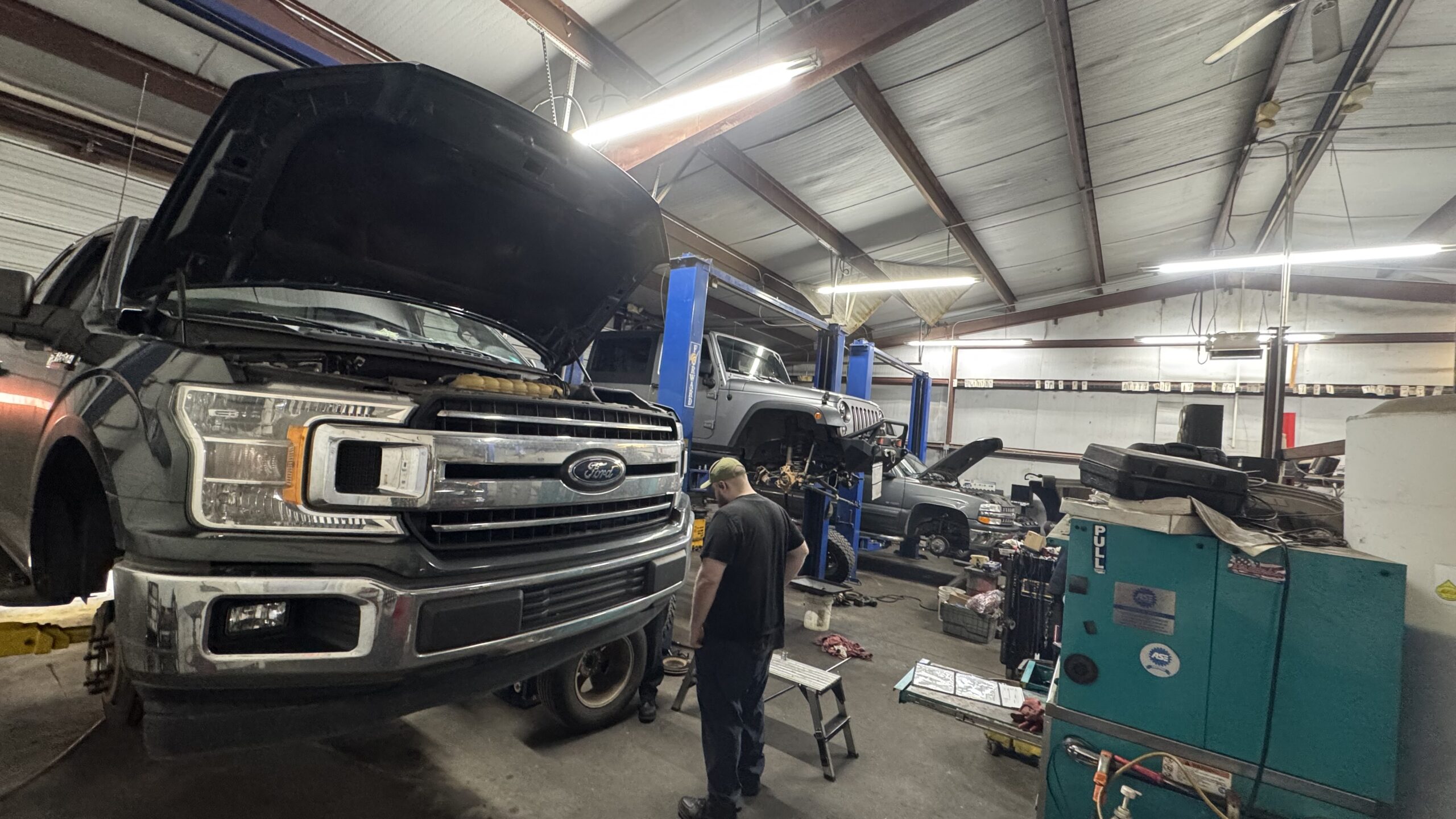
Alternator Failure: Signs, Causes, and What to Do
Alternator failure can cause a dead battery, dim or flickering headlights, slow electrical accessories, dashboard warnings, engine stalling, and a vehicle that will not restart. The alternator generates electrical power while the engine is running and recharges the battery after startup.
If the alternator cannot produce stable power, your vehicle may run only until the battery’s stored energy is depleted. A battery warning light, fading lights, repeated jump-starts, burning smell, or stalling while driving should be diagnosed promptly.
Freehome Service Center provides alternator testing, charging-system diagnostics, battery testing, starter diagnostics, belt inspections, wiring repair, and automotive electrical repair for drivers in Cumming, GA, Freehome, Forsyth County, and surrounding North Georgia communities.
Quick Answer: What Are the Signs of Alternator Failure?
Common signs of a failing alternator include:
- Battery or charging-system warning light on the dashboard.
- Headlights, interior lights, or dashboard lights that dim, brighten, or flicker.
- Repeatedly dead battery.
- Slow or intermittent power windows, radio, displays, or accessories.
- Low or unusually high voltage-gauge reading.
- Whining, grinding, or squealing sound from under the hood.
- Burning rubber or electrical smell.
- Difficulty starting the vehicle.
- Engine stalling while driving.
- Vehicle starts with a jump but dies shortly afterward.
A failing alternator can cause battery warnings, dim or flickering lights, electrical accessory problems, unusual noise, burning smell, repeated dead batteries, and engine stalling.
What Does an Alternator Do?
The alternator is part of your vehicle’s charging system. It converts mechanical energy from the running engine into electrical energy. That power operates vehicle systems and recharges the battery.
The alternator works with several related components:
Component | Role in the Charging System |
Alternator | Generates electrical power while the engine runs |
Battery | Stores energy for starting and provides power when the engine is off |
Voltage regulator | Helps control alternator output and system voltage |
Serpentine belt | Drives the alternator pulley on many vehicles |
Battery cables and wiring | Carry electrical current through the vehicle |
Fuses and fusible links | Protect charging-system circuits |
Engine control modules | Monitor electrical operation in many modern vehicles |
When the alternator fails, the vehicle may temporarily operate using stored battery power. Once the battery charge falls too low, electrical accessories may stop working, warning lights may appear, and the engine can stall.
Battery Warning Light: What It Really Means
The dashboard battery symbol is commonly called the battery light, but it usually indicates a charging-system problem, not simply a bad battery. The warning can be triggered by low alternator output, overcharging, a damaged belt, wiring concern, loose cable, voltage-regulator problem, blown fuse, or another fault in the charging circuit.
If the battery light comes on while driving:
- Turn off unnecessary electrical accessories when safe.
- Avoid high electrical loads, such as phone charging, heated seats, or unnecessary climate-control use.
- Do not ignore dimming lights, warning messages, or reduced accessory performance.
- Drive only as far as necessary to reach a safe location or repair facility.
- Stop driving if the vehicle begins stalling, lights are fading severely, or you smell burning rubber or electrical wiring.
A charging-system warning light should be diagnosed quickly because the battery may not have enough remaining power to keep the vehicle operating for long.
Common Causes of Alternator Failure
Alternators can fail because of normal wear, electrical faults, mechanical problems, and outside contamination.
| Possible Cause | How It Can Affect the Alternator |
| Internal wear | Brushes, bearings, windings, and other components may wear over time |
| Failed diodes | Alternator output may drop, become unstable, or stop |
| Faulty voltage regulator | Can cause undercharging, overcharging, or erratic voltage |
| Worn or damaged bearing | May create grinding or whining noise and lead to failure |
| Serpentine belt issue | Prevents the alternator from spinning correctly |
| Heat exposure | Can damage internal electrical insulation and components |
| Oil or coolant leak | Fluid contamination can corrode or short internal parts |
| Damaged wiring or connections | Limits power flow between alternator, battery, and electrical systems |
| High electrical demand | Excessive accessory load can stress the charging system |
The correct repair depends on the confirmed cause. In some cases, a belt, cable, fuse, connection, or voltage-regulation concern may be repairable without replacing the alternator.
Alternator vs. Battery vs. Starter
These components have different jobs, but their symptoms can overlap.
| Symptom | Possible Cause | Why It Matters |
| Slow crank or rapid clicking | Battery, battery connection, or starter | Battery may not have enough energy to crank the engine |
| Battery light while driving | Alternator, voltage regulator, belt, wiring, or charging circuit | The battery may not be recharging |
| Engine starts with a jump then dies | Alternator or charging-system concern | Vehicle may be operating only on stored battery power |
| Lights and accessories dim while driving | Alternator, battery, wiring, or poor ground | Electrical system may not receive consistent voltage |
| Normal dash lights but engine will not crank | Starter, solenoid, cable, or connection | Starting circuit may have failed |
| Repeated dead battery | Battery, alternator, parasitic draw, or connection issue | Full electrical testing is needed |
Do not disconnect the battery while the engine is running to test the alternator. This can damage electrical components and computer modules in modern vehicles.
How Is Alternator Failure Diagnosed?
Accurate alternator diagnosis requires testing the complete charging system. A technician may perform:
- Battery load and condition testing.
- Alternator-output testing.
- Voltage-regulation testing.
- Charging-system voltage-drop testing.
- Inspection of battery terminals, cables, and grounds.
- Serpentine-belt, pulley, and tensioner inspection.
- Fuse, relay, and wiring evaluation.
- Starter-system testing.
- Scan-tool diagnostics for electrical and charging-system codes.
- Electrical draw testing when a battery repeatedly dies.
Freehome Service Center provides advanced electrical diagnostics, battery testing and replacement, alternator and charging-system repair, starter diagnosis, fuse and relay checks, and wiring and connection repairs.
Alternator Replacement Cost Factors
Alternator replacement cost varies by vehicle. The final estimate depends on the alternator design, whether a new, remanufactured, or manufacturer-specified unit is needed, labor access, belt or tensioner condition, electrical-system repairs, and the cause of failure.
Industry estimates vary widely. Kelley Blue Book lists an average alternator-replacement range of $747 to $842, while costs can be lower or substantially higher depending on the vehicle and repair complexity. A vehicle-specific inspection and written estimate provide the most reliable cost information.
Alternator Repair in Cumming, GA
A failing alternator can leave you stranded, damage a battery through improper charging, or cause your vehicle to stall while driving. If your battery light is on, headlights are flickering, the battery repeatedly dies, or electronics are acting unpredictably, schedule charging-system diagnostics promptly.
Call Freehome Service Center at (678) 947-6000 to schedule alternator testing and electrical repair in Cumming, GA. The shop is located at 14251 Cumming Highway, Cumming, GA 30040-5454, serving Freehome, Forsyth County, Canton, Ball Ground, Alpharetta, Sugar Hill, and nearby communities.